

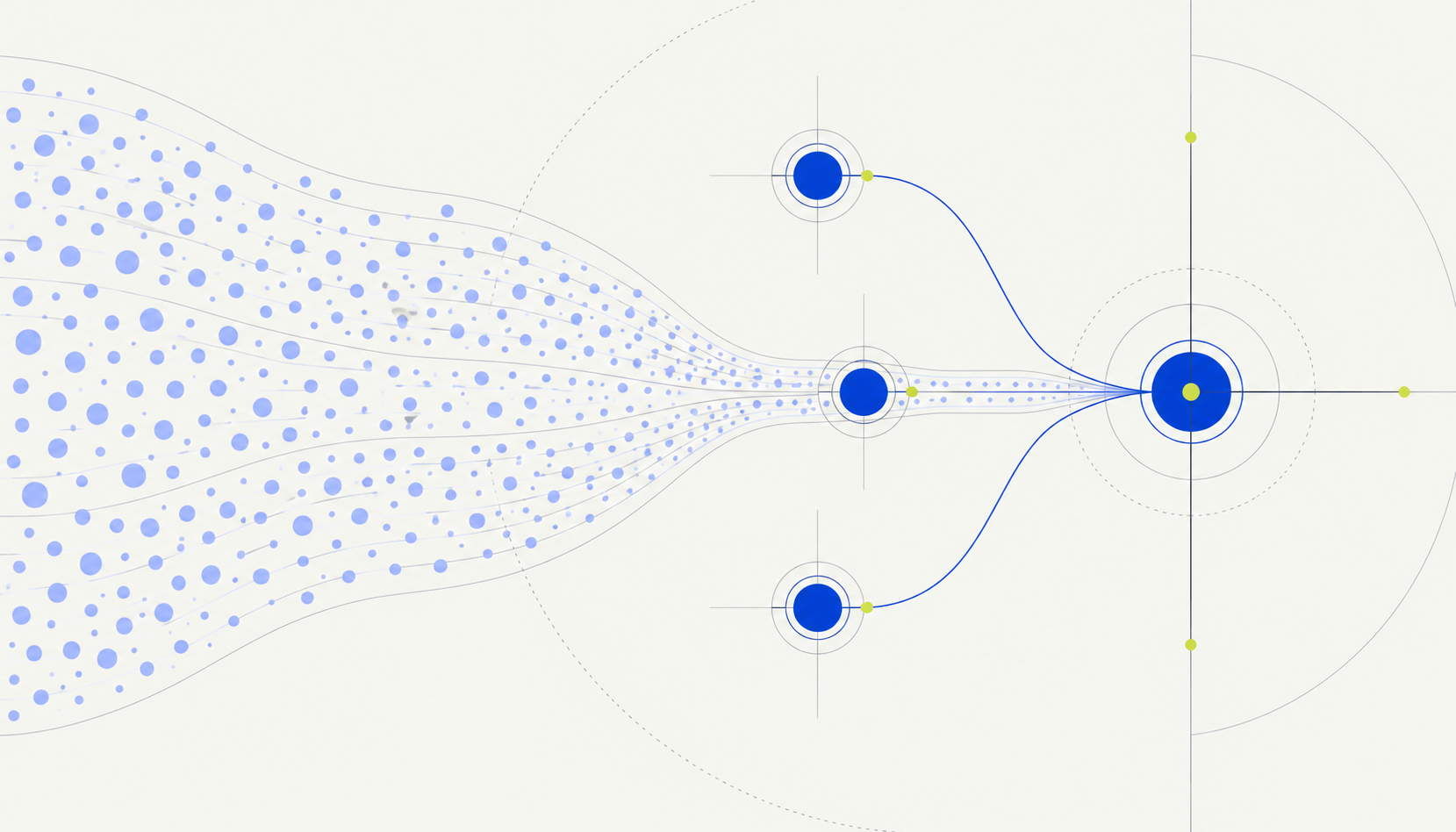
Account-based marketing (ABM) and demand generation answer different planning questions. Demand generation builds and captures interest across a market; ABM concentrates coordinated work on selected accounts and the people involved in their buying decisions. For most B2B teams, the decision is how much focus to place on each motion—not which one to eliminate.
Use broader demand generation when the addressable market is larger than a practical target list, category understanding needs to grow, or sales coverage is not limited to named accounts. Give ABM more weight when the account universe is identifiable, account value supports tailored work, and sales can act on account-level signals. Many teams combine them, with clear boundaries for audience, offer, follow-up, and reporting.
The difference is the unit of planning
Demand generation starts with a market, segment, or buyer problem and asks how to make the problem and solution easier to understand. ABM starts with a selected organization and asks how marketing and sales can help the relevant buying group make progress. Neither definition guarantees demand, pipeline, or revenue; each describes how effort is organized.
| Decision lens | Demand generation | Account-based marketing |
|---|---|---|
| Planning unit | A market, segment, or audience with a shared problem. | A named account and its relevant buying roles. |
| Core question | How do we create or capture useful interest across this market? | Which selected accounts need coordinated attention, and what would help them decide? |
| Typical work | Category education, useful content, campaigns, and pathways to a relevant conversation. | Account selection, role-aware messages, coordinated sales and marketing actions, and account follow-up. |
| Useful evidence | Qualified engagement and progression across a defined audience or cohort. | Coverage of priority accounts and roles, meaningful conversations, and accepted opportunities. |
| Common failure | Calling form volume or platform conversions proof of pipeline. | Treating an account click or an uploaded list as proof of buying intent. |
When broad demand generation deserves more weight
Use a market-wide motion when the team is still learning which organizations have the problem, when prospective buyers need education before they can name a solution, or when many accounts can be served through the same useful experience. A defined audience can still be segmented; broad does not mean indiscriminate.
This approach also fits when the sales team cannot provide tailored follow-up for a large named-account program. A campaign that generates interest without an owner, a relevant next step, or a way to qualify the response can create operational noise. Before adding more reach, agree on what counts as a useful response and where sales will see it.
When ABM deserves more weight
A focused account motion is more defensible when sales and marketing can name the accounts that fit, explain why they matter, and coordinate around the people who influence the decision. Account-level effort may be especially useful when one person’s engagement is not enough to understand organizational readiness.
ABM still needs demand generation fundamentals: a credible problem statement, useful information, an offer appropriate to the buyer’s stage, and measurement that does not overstate influence. It is not simply retargeting, a contact list, or a paid social setting. For the full operating guide, see the B2B account-based marketing guide.
Combine them without blurring their jobs
A combined plan works when market-level programs and account-level plays serve distinct purposes. Use this sequence to make the design explicit:
- Define the addressable market. State which industries, company types, and buyer problems are in scope. Keep exclusions visible so broad reach does not quietly expand.
- Set an account tier only when the reason is clear. Name the evidence behind priority accounts and the level of tailoring the team can actually deliver.
- Give each motion a distinct job. Demand generation can educate and capture interest across the market; ABM can coordinate action for selected accounts and roles.
- Connect each response to an owner. Define the CRM record, routing rule, follow-up expectation, and sales acceptance signal before launch.
- Keep the cohorts separate in reporting. Track market programs and account plays with their own audience, time window, and outcome definitions. If an account is touched by both, show both facts without counting the same opportunity twice.
The existing B2B demand generation strategy guide explains the broader operating system. This comparison focuses on how to divide attention between a market-wide motion and selected-account work.
Measure each motion at the level where it operates
| Question | Measure to inspect | Guardrail |
|---|---|---|
| Is the market program reaching relevant buyers? | Qualified responses or meaningful engagement within the defined segment. | Reach and clicks show exposure, not readiness or fit. |
| Are priority accounts being covered? | Share of selected accounts with relevant roles reached and a meaningful next action available. | One contact’s activity does not establish buying-group coverage. |
| Does activity become sales work? | Accepted meetings or opportunities from a defined cohort and time window. | Use the same sales-acceptance rule across channels. |
| What did marketing contribute? | Sourced and influenced pipeline shown separately, with the attribution rules stated. | Influence is not the same as sole causation or booked revenue. |
Avoid the false either-or
Teams often argue about ABM versus demand generation as if the names define mutually exclusive budget lines. That can hide the real constraint: unclear market focus, missing sales capacity, weak follow-up, or an inability to connect activity with opportunity records. Decide which constraint needs attention before changing the label on a campaign.
Illustrative scenario, not a client result: A B2B software company sells to a wide range of mid-market firms but has a short list of strategic accounts with complex buying groups. It can use a market-wide education program for the broader segment and reserve tailored plays for those strategic accounts. The two motions should share positioning while retaining distinct account lists, response paths, and reporting cohorts.
The decision
Choose the motion by the business’s observable constraint. Use demand generation to develop and capture interest across the relevant market; use ABM when a defined set of accounts merits coordinated effort across its buying roles. Combine the motions when the team can explain how each one helps a buyer and can measure its outcomes without counting the same pipeline twice.
Sources checked October 22, 2026: LinkedIn’s account-based marketing overview and LinkedIn’s demand generation guide.
How did this article land?
Choose one reaction. You can change it anytime.