

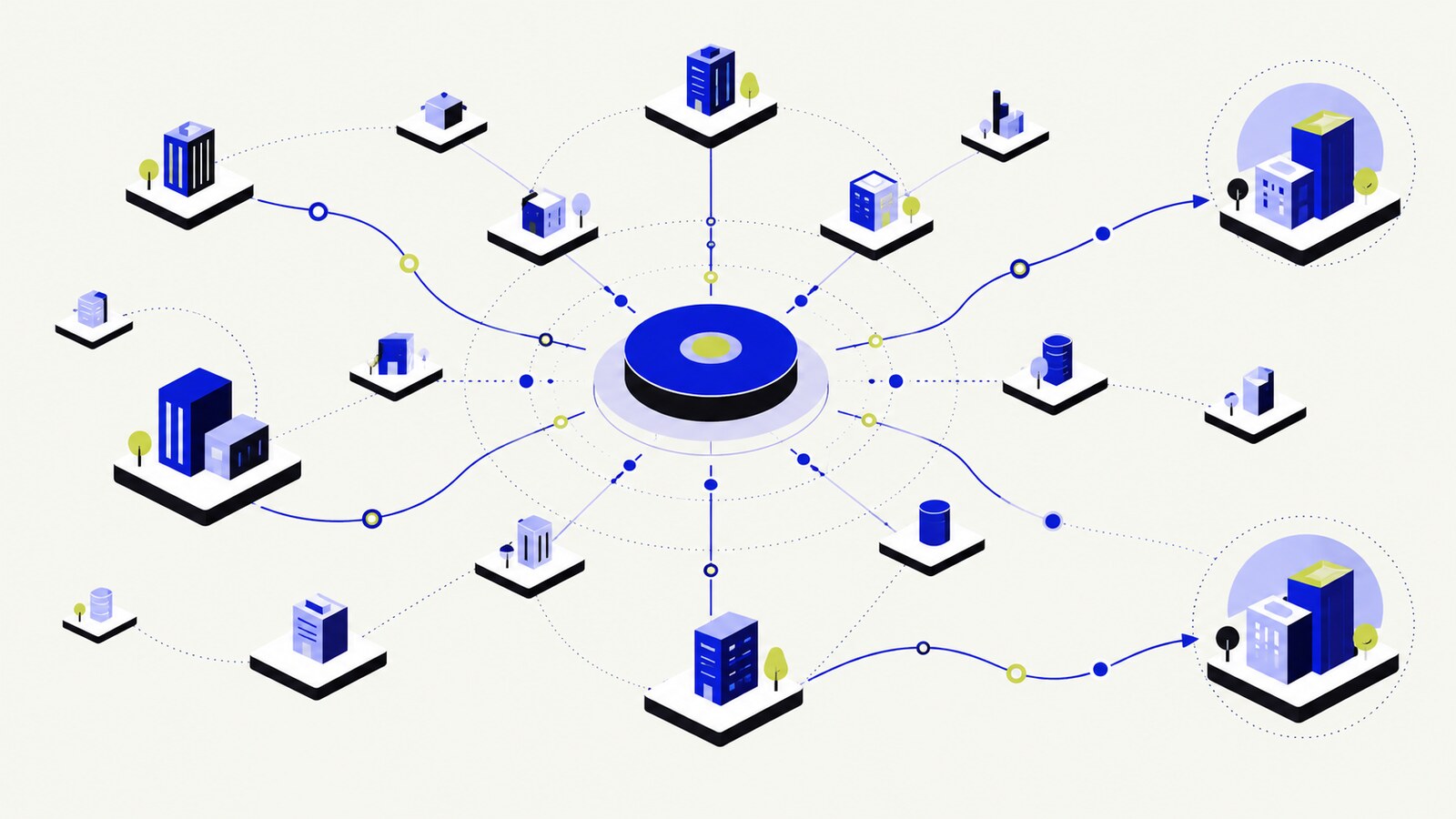
B2B customer marketing is the coordinated work of helping existing customers adopt, renew, expand, and advocate for a product or service. It connects useful customer education and communication with account signals, customer success activity, sales ownership, and revenue measurement.
A customer marketing program is not a sequence of upsell emails. It should make the next customer action easier, avoid creating noise during a service problem, and give the commercial team a reliable view of where assistance may be useful. The right program depends on the customer’s situation, not only the calendar.
Separate customer marketing from lifecycle labels
Customer marketing focuses on relevant programs for the installed base. Customer Success owns the relationship and service outcomes; Sales may own a commercial expansion; Marketing can design education, community, advocacy, and campaign systems that help customers progress. The boundaries vary by organization, so define one accountable owner for each action.
Lifecycle stages are useful only when they reflect observable customer progress. A contract date alone does not show adoption, and an email click does not prove value realization. Use a small number of agreed signals, such as onboarding completion, adoption of a relevant capability, a customer-stated goal, renewal timing, or a documented service risk.
Start with customer segments and decisions
Choose segments based on a decision the team can act on. Useful dimensions may include product or service line, customer size, implementation status, adoption pattern, renewal period, growth potential, or support context. Avoid building a segment merely because the CRM contains a field for it.
For each segment, define one primary objective and one action. A customer who has not reached an onboarding milestone may need enablement, not an expansion offer. A satisfied customer may be open to advocacy, but the request should follow permission and evidence of a positive experience. A customer with an unresolved service issue may need marketing suppression and direct support.
The model below ties a signal to a program, an owner, and a decision measure. It is a starting point for an operating plan, not a one-size-fits-all customer journey.
| Customer situation | Useful program | Primary owner | Evidence to review |
|---|---|---|---|
| New customer with an unfinished onboarding milestone | Role-based onboarding guidance or a working session | Customer Success, supported by Marketing | Milestone completion and unresolved blockers |
| Customer using a core capability but not an adjacent workflow | Use-case education tied to the customer’s stated goal | Customer Success or Product Education | Adoption of the relevant workflow and customer feedback |
| Customer approaching a renewal with uncertain value evidence | Value review and issue resolution before promotional messaging | Account owner and Customer Success | Renewal readiness, risks, and agreed outcomes |
| Customer with a documented expansion need | A relevant solution discussion with the account owner | Sales or account management | Qualified expansion opportunity and next step |
| Customer willing to share a reference or story | Consent-based advocacy request with clear scope | Customer Marketing | Permission, asset completion, and ongoing consent |
Build the operating system before adding more campaigns
- Write a one-page program brief: target segment, customer problem, intended outcome, value offered, owner, exclusions, and review date.
- Agree on the source of truth for customer status. Specify which system owns account, contact, product-use, service, and commercial fields. Define how changes are passed between systems and who resolves conflicts.
- Set entry and exit rules. A trigger should explain why a customer enters a program, what event pauses it, and when the customer exits. Do not let a customer remain in a program after the need has changed.
- Use customer language and useful content. Prioritize guidance, implementation help, advanced use cases, peer learning, and clear next steps over generic promotional reminders.
- Route commercial signals to the right owner. Expansion interest and renewal risk should reach the account team with the signal and its context, not only as an automation notification.
- Review whether the program helped the customer and changed a business decision. Update the segment and message when the evidence shows the assumption was wrong.
Coordinate communication with service and consent signals
Customer communication has to respect what is happening in the account. Create suppression rules for open incidents, customer-requested pauses, unresolved billing or delivery issues, and preferences that should stop a particular message. Suppression is an operating control: it prevents a promotional workflow from contradicting a live service conversation.
Store consent and communication preferences in a system the campaign tools can reliably honor. Decide how a change propagates, how failed updates are detected, and who checks exceptions. Avoid inferring permission from product use, event attendance, or a customer’s relationship with an individual employee. Applicable requirements vary by market and communication type; have the appropriate owner review the rules for the regions you serve.
When a customer issue requires attention, it can be better to pause a campaign than to send a message that ignores the context. See the guide to pausing customer marketing during a service issue.
Measure customer progress without overclaiming attribution
Use leading indicators to check whether a program reached the intended group and supported a useful action: eligible accounts reached, participation by relevant roles, completion of an education milestone, response to a support offer, or documented customer feedback. These measures help operators find friction before waiting for renewal or expansion outcomes.
Use lagging measures to understand the wider customer base: renewal rate, expansion revenue, gross or net revenue retention, advocacy participation, or customer health trends. These are account or cohort outcomes. They should not be credited to one marketing touch unless the measurement design supports that conclusion.
Keep a stable cohort definition, compare like with like, and separate customers who were eligible for a program from those who actually received or engaged with it. This avoids treating customers already on a renewal path as proof that a campaign caused renewal. The guide to customer success metrics explains why leading and lagging signals answer different questions. For a related operating view, see how to build an explainable customer health score and how to define and measure expansion revenue.
A simple program scorecard
- Customer outcome: what progress or problem resolution should the program support?
- Reach and relevance: which eligible accounts received the intended communication, and which roles took part?
- Operational quality: were exclusions, preferences, ownership, and data updates respected?
- Commercial outcome: what happened to renewal, expansion, or advocacy in the defined cohort?
- Learning: what should the team stop, change, or repeat in the next cycle?
Illustrative example: adoption before expansion
Imagine a SaaS company has customers who purchased an advanced workflow but have not yet implemented it. A customer marketing program could offer a practical workshop built around that workflow, with Customer Success owning the customer conversation and Marketing coordinating invitation, content, and participation data. The account owner would receive an expansion signal only when the customer states a relevant need.
The team would check whether the right customer roles attended, whether the workflow was adopted, and whether blockers were resolved. If an account has a service issue, the campaign would pause and the service owner would take priority. The example is illustrative and makes no claim about typical adoption or revenue results.
Avoid these customer marketing mistakes
- Sending the same message to every customer because segment and product-use data are not connected.
- Treating email engagement as proof of product value, renewal intent, or expansion readiness.
- Optimizing for campaign activity while ignoring support incidents, customer preferences, or account ownership.
- Reporting retention or expansion as campaign-attributed revenue without a cohort or comparison design.
- Requesting a reference or testimonial without explicit permission for the intended use.
Build one program, then expand
Start with a customer need the team can observe and support. Define the segment, signal, value offered, accountable owner, suppressions, data path, and outcome measure before automation. A useful customer marketing system makes customer progress visible to the people who can act on it—and keeps the communication relevant to the customer’s actual situation.
How did this article land?
Choose one reaction. You can change it anytime.