

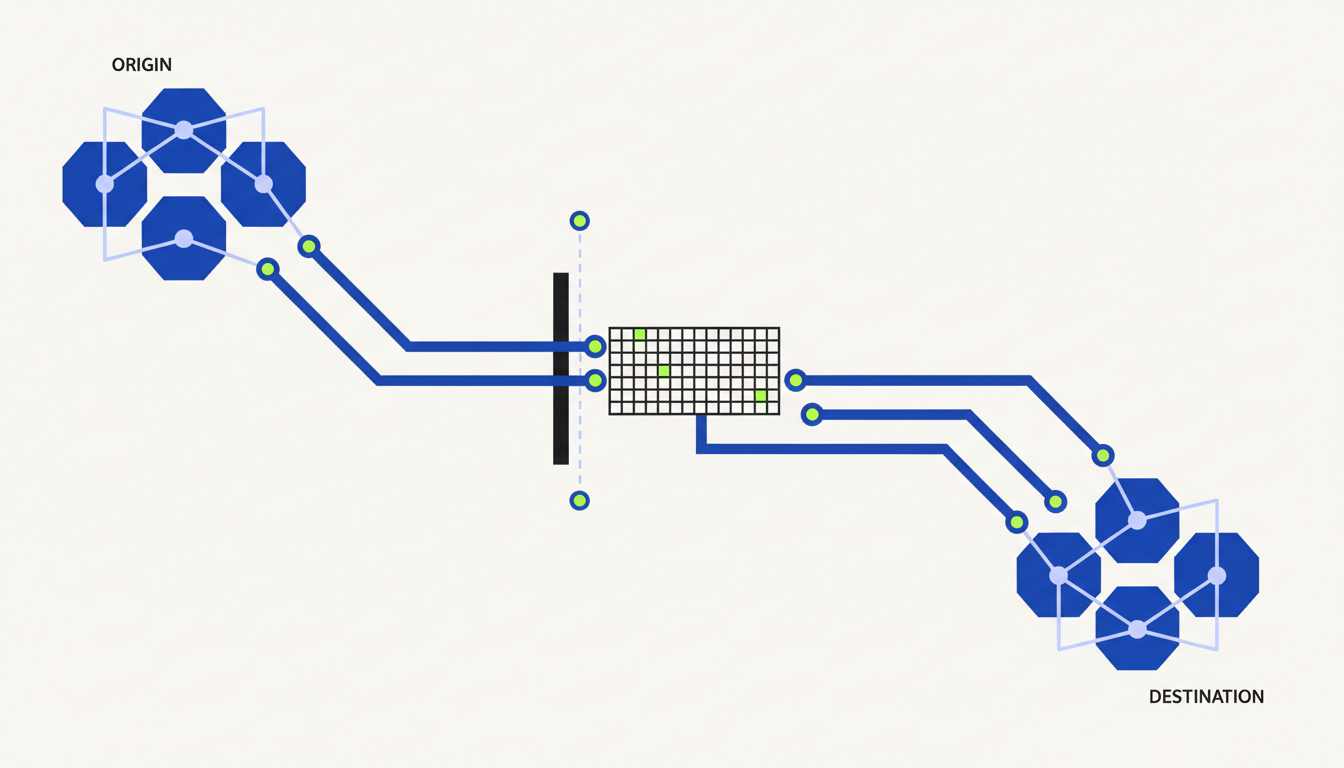
Logistics companies do not sell one interchangeable service. A freight forwarder, a third-party logistics provider, a warehouse operator, a carrier, and a logistics software firm face different buying triggers, qualification questions, and delivery constraints. A marketing plan that treats them as one market can generate inquiries the business cannot or should not serve.
This guide shows logistics leaders how to build demand around service fit: define the commercial envelope, focus on buyers with a relevant need, create a useful path from inquiry to quote or opportunity, and measure what becomes qualified business. It is an operating framework; each provider should validate the details against its own services and markets.
Define the service envelope
Before selecting a channel, specify what the company can deliver and under which conditions. Depending on the business, this may include service type, route or region, shipment characteristics, timing, capacity, required documentation, account profile, systems integration, or implementation support. Record what is available, constrained, and out of scope.
This definition protects both demand quality and customer trust. Marketing should not imply coverage, capacity, handling capability, or delivery terms that operations has not confirmed. Ask the operational owner to review public claims and the questions used to qualify an opportunity.
Segment by service need and operating fit
Start with a small number of segments that differ in a meaningful way: the customer’s logistics problem, the service required, the buying roles, or the conditions that determine fit. Depending on the offer, relevant groups may include shippers, manufacturers, importers, retailers, distributors, or technology buyers. Avoid treating a company label as proof of a current need.
| Qualification dimension | Question to resolve | Why marketing needs it | Next owner |
|---|---|---|---|
| Service requirement | Which logistics service or operating problem is involved? | Routes the inquiry to the right offer and proof | Commercial or solution owner |
| Geography and route | Where must the service operate, and are there relevant constraints? | Prevents demand for unavailable coverage | Regional operations |
| Timing and urgency | Is this research, a planned sourcing event, or an active requirement? | Sets a suitable follow-up path | Sales or account owner |
| Commercial fit | Does the opportunity match the provider’s service and account criteria? | Protects sales time and delivery capacity | Sales with operations input |
| Decision process | Who evaluates, approves, and implements a change? | Helps content and follow-up answer the real buying task | Account team |
Not every dimension belongs on a public form. Use the first interaction to collect the minimum information needed for a relevant response, then gather operational detail through an appropriate conversation. A form that asks for technical shipment detail before explaining why it is needed can create avoidable friction.
Match each demand motion to buyer readiness
Active search can capture buyers looking for a specific service, route, or solution. Educational content can help a company understand a sourcing change, operating risk, or technology decision. Account-based outreach can make sense when the company can identify a small set of high-fit organizations and tailor the discussion to their operating context. Referral or partner activity can support trust when another provider has a complementary role.
Choose one commercial question for each motion. For example: are buyers with a defined service need reaching the right team, and does the response produce a qualified quote or opportunity? Measure that path instead of equating website visits, inquiries, quote requests, and won work.
Build the journey around the quote or opportunity
The website should help a buyer understand the service, relevant coverage, information required to evaluate fit, and the next action. If the commercial motion begins with a quote request, explain what happens after submission and what information speeds a useful response. If the first step is a consultation or technical assessment, tell the buyer who should attend and what will be decided.
In the CRM, preserve service line, market or route, account, request type, source, qualification result, owner, and next action where those fields support the workflow. Route by the actual delivery or commercial boundary when needed. Review duplicates, stale inquiries, and requests outside the service envelope so channel reports do not disguise operational mismatches.
For the measurement path from campaign to commercial outcome, see the logistics marketing attribution guide. Use its attribution definitions alongside an operational review of whether the business could serve the demand.
Evaluate quality and economics, not lead count alone
Review each stage with its own definition: inquiry received, inquiry accepted, qualified opportunity, quote or proposal issued, customer won, and service delivered. The exact stages depend on the company’s sales model. Keep rejected or unserviceable requests visible with a reason so marketing can identify audience or message problems.
Compare acquisition and follow-up effort with commercial outcomes under the company’s finance rules. A low cost per inquiry may still be poor economics if the request lacks service fit, takes excessive operations time, or never progresses. A higher-cost channel may be worth testing if it reaches accounts with a relevant need and supports healthy commercial work. Do not call platform-reported return confirmed revenue until sales and finance records substantiate it.
Use a controlled planning cycle
- Ask operations and sales to define service boundaries, capacity constraints, and commercial fit.
- Select a buyer segment and buying trigger that match a deliverable service.
- Choose a channel and content offer suited to the buyer’s current task.
- Set the inquiry fields, routing owner, qualification definition, and follow-up path.
- Review accepted opportunities, quotes, wins, and service fit at a consistent checkpoint.
Logistics marketing becomes more reliable when the promise in the campaign matches what the operating network can deliver. Start with service fit, keep the path to a commercial next step clear, and use qualified outcomes to decide where demand investment belongs.
How did this article land?
Choose one reaction. You can change it anytime.